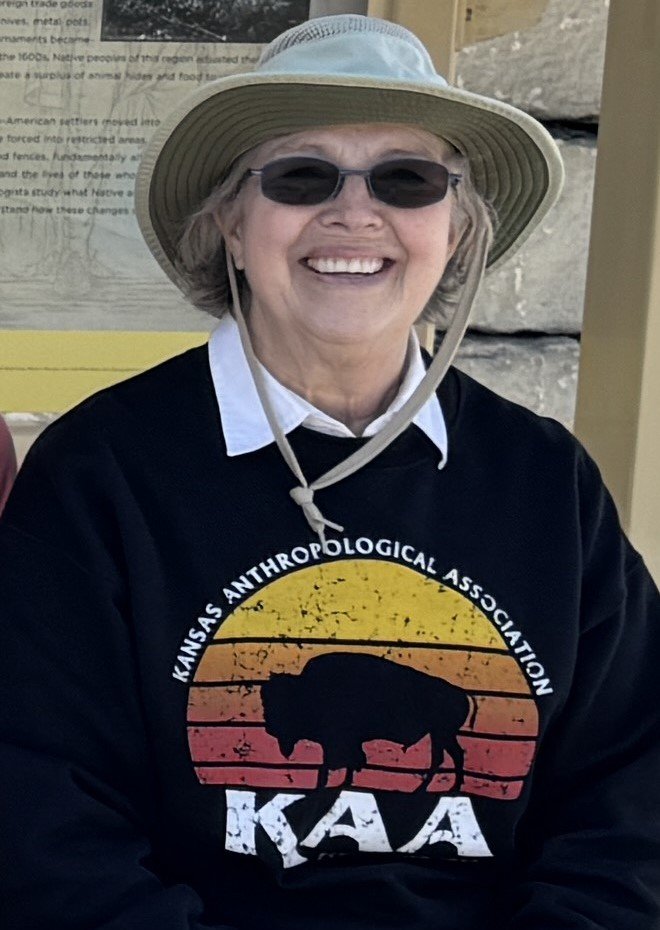
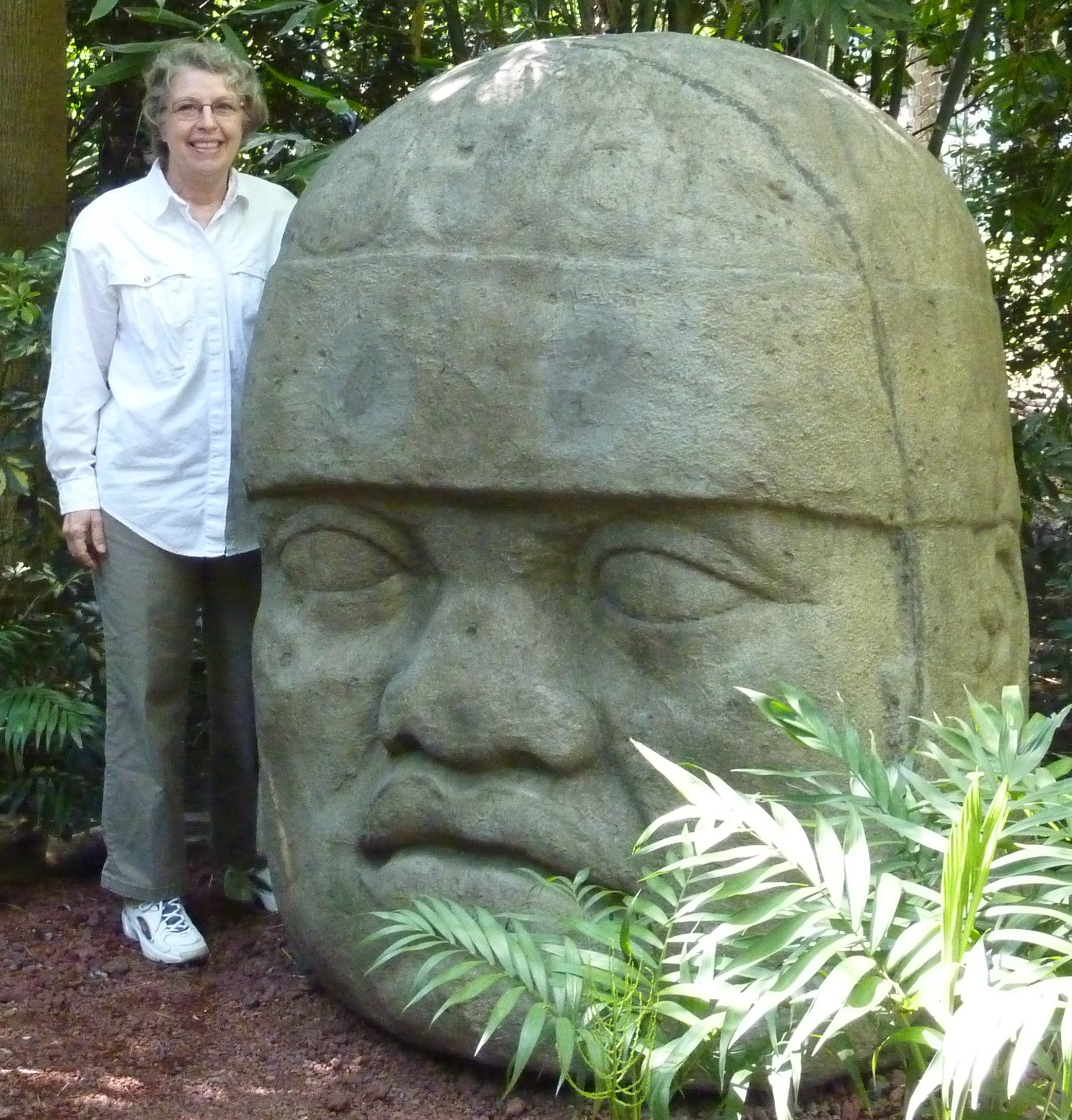
Virginia grew up in rural Douglas County. She earned a bachelor’s degree in anthropology from the University of Kansas and a master’s degree from the University of Texas at Austin. During her 20 years in Texas, she worked for the Texas Antiquities Committee and Texas Historical Commission in Austin and the Museum of the Big Bend in Alpine. She returned to Kansas in 1990 to serve as the public archeologist for the Kansas Historical Society until her retirement in December 2017.
Virginia was privileged to work with three Kansas State Archeologists: Thomas A. Witty, Jr., John D. Reynolds, and Robert J. Hoard. She served as acting state archeologist from 1997 until 2000. As public archeologist, she coordinated the Kansas Archeology Training Program field school and other public archeology events from 1993 through 2017. She presented public programming and prepared public education materials, including Kansas Archeology Week/Month posters and accompanying materials for 12 years, and assisted the KSHS Museum and Education Division in creating traveling archeology trunks. She received a certificate recognizing distinguished service to the Kansas Historical Society in 2017.
Virginia was invited to join the National Leadership Team (2008-2011) for Project Archaeology, a national heritage education program, and developed both national and Kansas-specific curricula. She was Project Archaeology coordinator for Kansas (2002-2020) and remains a facilitator. She served as Public Education Committee chair (1997-2006) and president (2007-2009) of the Professional Archaeologists of Kansas.
Virginia joined the KAA in 1989. Since 1993, she has been editor of The Kansas Anthropologist. She serves on the KAA Executive Committee, Certification Program Committee, and Publications Advisory Committee. She was secretary of the KAA Shawnee Chapter for many years and currently is chapter vice-president. She was honored with the KAA’s Lifetime Service Award in 2020.
Virginia lives on a farm west of Lawrence that has been in her family since Kansas Territory. She has placed a conservation easement on the acreage, which includes a remnant of native prairie; upon her death it will become a biological preserve for the University of Kansas.